Picture this.
You’ve just presented your water treatment system to a potential customer, explaining how it works, the technology behind it, and why it’s a reliable solution.
The customer seems interested, but eventually says:
“Thanks, but I’d like to compare a few other quotes before making a decision.”
A few days later, you find out they’ve chosen a competitor offering a similar system at a lower price.
And yet, you’re convinced your product is better, your after-sales support is more reliable, and your overall service offers much more.
So why didn’t they choose you?
The problem might not be your price. It could be how you’ve communicated the value of your offer.
When customers can’t clearly see what sets two solutions apart, they tend to compare them based on the most obvious factor: price.
So, if you sell or rent water filtration and treatment systems, your job isn’t simply to present a product.
It’s to help customers understand why choosing your solution can give them a better overall experience.
Customers Don’t Want a Water Filtration System. They Want What It Can Do for Them.
Imagine you’re offering a water dispenser to a restaurant owner.
You explain its technical specifications, dispensing capacity, and overall performance.
But the restaurant owner has something else in mind.
They want to serve their guests great-tasting water, at the right temperature, with consistent carbonation.
They want their staff to use the system easily.
And, above all, they don’t want technical problems disrupting service.
They’re not simply looking for a machine that dispenses water.
They’re looking for a solution that helps their business run smoothly, without unnecessary complications.
The same applies to a family that wants convenient access to drinking water every day, or an office looking to eliminate the hassle of managing bottled water deliveries.
Customers don’t just buy what a product does. They also buy the problems it helps them avoid.
And that’s where perceived value comes in.
Why Can Two Similar Systems Have Such Different Prices?
In the water treatment market, you can find systems priced at €2,000 and others costing €5,000 or even €8,000.
Of course, these differences may reflect the technology, component quality, and services included.
But what customers are willing to pay also depends on the value they see in the solution.
Imagine two companies offering a water dispenser to a restaurant.
The first presents the technical specifications and gives the price.
The second starts by understanding the restaurant owner’s needs.
How many guests do they serve? How important is consistent water temperature? What would happen if the system stopped working in the middle of service?
Both companies might be offering very similar products.
But the customer could see their offers very differently.
Because the second conversation isn’t just about a water dispenser.
It’s about keeping service running smoothly, making life easier for staff, and delivering a better guest experience.
And those benefits can be extremely valuable to a business owner.
The 4 Factors That Increase the Perceived Value of a Water Filtration System
If you want to stand out from competitors, there are four key factors to focus on.
- The Desired Outcome: Sell the Experience, Not Just the Performance
It’s not enough to explain that a system delivers filtered, chilled, or sparkling water.
You need to show customers how it can improve their everyday experience.
For a restaurant, that means serving consistently high-quality water, even during the busiest periods.
For a hotel, it means providing a service that meets guests’ expectations.
For a family, it means having convenient access to drinking water that suits their preferences.
Before explaining what your system does, find out which outcome matters most to your customer.
- Trust: Show Customers They Can Rely on You
When customers buy or rent a water treatment system, they’re not just thinking about how well it works on day one.
They want to know what will happen in the months and years ahead.
Will the system remain reliable? Will maintenance be easy to arrange? If something goes wrong, will they have access to knowledgeable technical support?
That’s why you need to explain not only the quality of your product, but also the service behind it.
What checks are included? How is maintenance handled? What kind of after-sales support do you provide?
Trust comes from clear information and realistic commitments, not vague promises.
And when customers feel confident they can rely on your company, they’re more likely to recognise the value of your offer.
- Speed: Minimise Waiting Times and Disruption
Imagine a restaurant’s water dispenser stops working just before a busy weekend.
For the owner, the issue goes far beyond the equipment itself.
They need to find an alternative, manage the disruption, and spend valuable time dealing with an unexpected problem.
In situations like this, fast technical support can make a significant difference.
The same applies to installation and response times.
If your company can provide prompt, reliable service, make sure your customers know about it.
Because shorter waiting times often mean fewer problems for your customers to deal with.
- Simplicity: Save Customers Time and Effort
A system may offer excellent performance.
But how easy is it to use and manage?
Does it involve complicated procedures, or can people operate it with minimal effort?
Think about an office replacing bottled water coolers with a mains-fed dispenser.
The benefit isn’t just having drinking water available.
It’s also reducing deliveries, storage requirements, and the need to replace heavy bottles.
Or consider a restaurant where several staff members need to use the same dispenser.
An intuitive system can make daily operations much easier.
The easier you make your customers’ lives, the more valuable your solution becomes.
Before Discussing Price, Ask the Right Questions
How can you apply these four factors during a sales conversation?
Start by understanding what really matters to your customer.
Here are a few questions you can ask:
- Desired outcome: “What would you like to improve about the way you currently use and manage drinking water?”
- Trust: “How important is having a scheduled maintenance and support service?”
- Speed: “If the system stopped working, how would it affect your business?”
- Simplicity: “Which tasks involved in managing drinking water would you most like to eliminate?”
These questions help shift the conversation away from the cost of the system and towards the benefits the customer wants to achieve.
Because different customers value different things.
For a restaurant, uninterrupted water service might be the top priority.
For a family, ease of use could matter most.
For a business, dependable after-sales support might be the deciding factor.
Understanding these priorities helps you recommend a more relevant solution and communicate its value more effectively.
Your Job Isn’t to Justify the Price. It’s to Demonstrate the Value.
There’s an important difference between trying to justify a price and helping customers understand what they’re paying for.
Imagine two salespeople.
The first says:
“My system costs more because it uses better components.”
The second explains:
“With this solution, you can keep water service running smoothly, benefit from a scheduled maintenance plan, and rely on our technical support whenever you need assistance.”
The second explanation doesn’t make price irrelevant.
But it gives the customer something more tangible to evaluate.
Instead of simply claiming your product is better, you’re showing how it can make their day-to-day operations easier.
Of course, these benefits must be genuine and supported by what your company actually delivers.
It’s not enough to promise reliability, speed, and simplicity.
You need to demonstrate them.
That’s how you can differentiate yourself from competitors without turning every sales negotiation into a race to the lowest price.
Lead With Value, Not Price
The next time a customer tells you they’ve received a cheaper quote, don’t rush to offer a discount.
First, find out what they’re actually comparing.
Are they looking only at the upfront price?
Or have they also considered maintenance, technical support, reliability, and ease of use?
Help them understand the differences.
Explain the outcomes they can expect and the problems your solution can help them avoid.
You don’t need to leave technical specifications out of the conversation.
You need to use them to demonstrate benefits that matter to the customer.
Because when two offers seem identical, price can easily become the deciding factor.
But when customers understand that one solution can provide greater reliability, simplicity, and peace of mind, the conversation changes.
Your goal isn’t to convince every customer to buy the most expensive system. It’s to help them understand why your solution may be the right fit for their needs.
Don’t just sell a water filtration system.
Help customers recognise the value of everything that comes with it.
And turn a simple sales presentation into a meaningful consultation that goes beyond price alone.
Watch the Full Video on YouTube
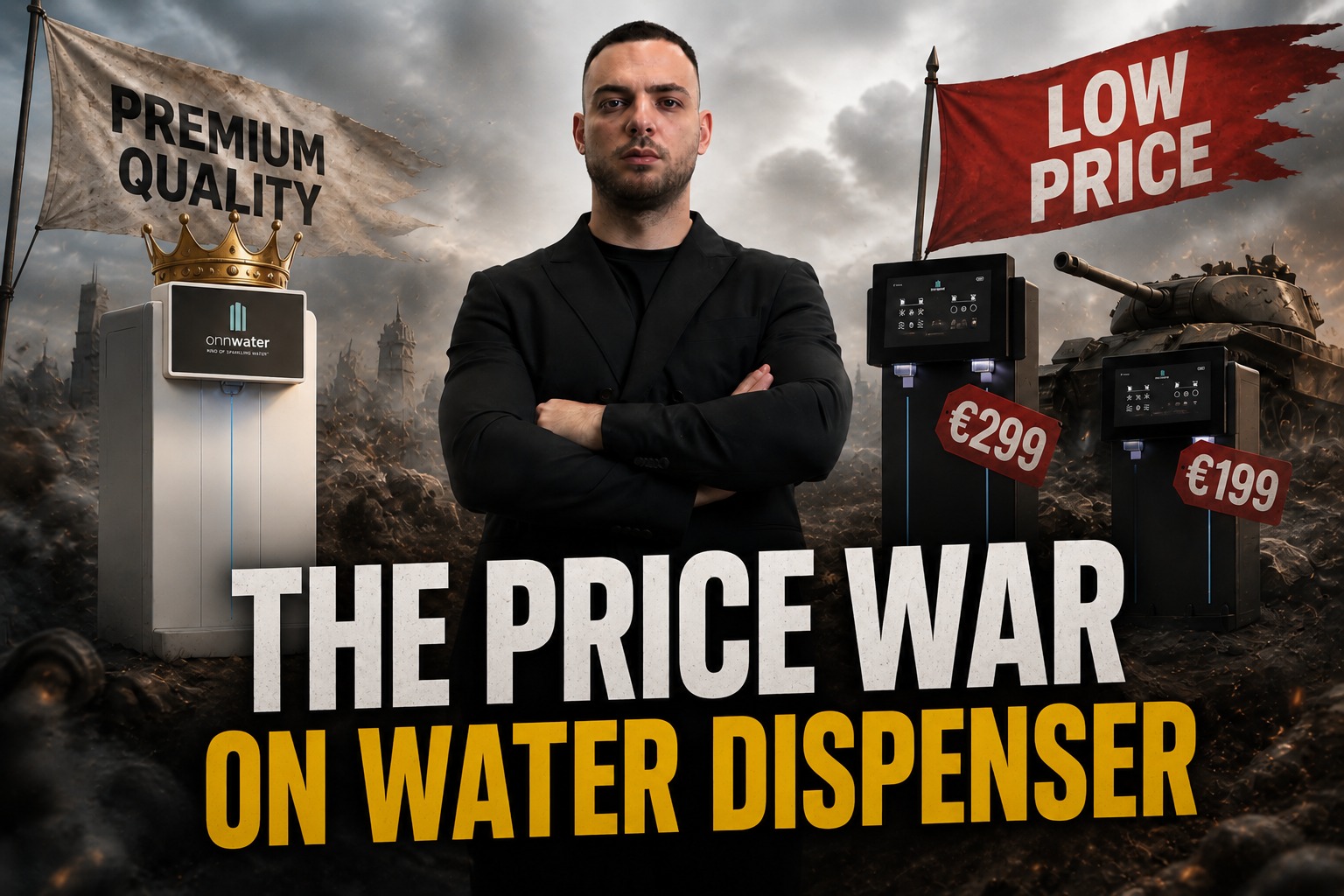
In this video, we explore why water treatment systems can sell at very different prices and how to use the four key drivers of perceived value to make your offer more compelling.
Discover how to shift the sales conversation from the cost of the equipment to the real benefits customers can enjoy every day.
Watch the full video on the OnnWater YouTube channel >>